Fresh Pasta Is Always the Star of the Show
Ask anyone who has taken a cooking class in Rome and they will tell you the same thing: fresh pasta is the heart of the experience. Most classes focus on hand-rolled pasta made from scratch, using just flour and eggs. You will learn to knead the dough until it reaches the right texture, roll it thin with a wooden pin or hand-cranked machine, and cut it into shapes like tagliatelle, fettuccine, or pappardelle.
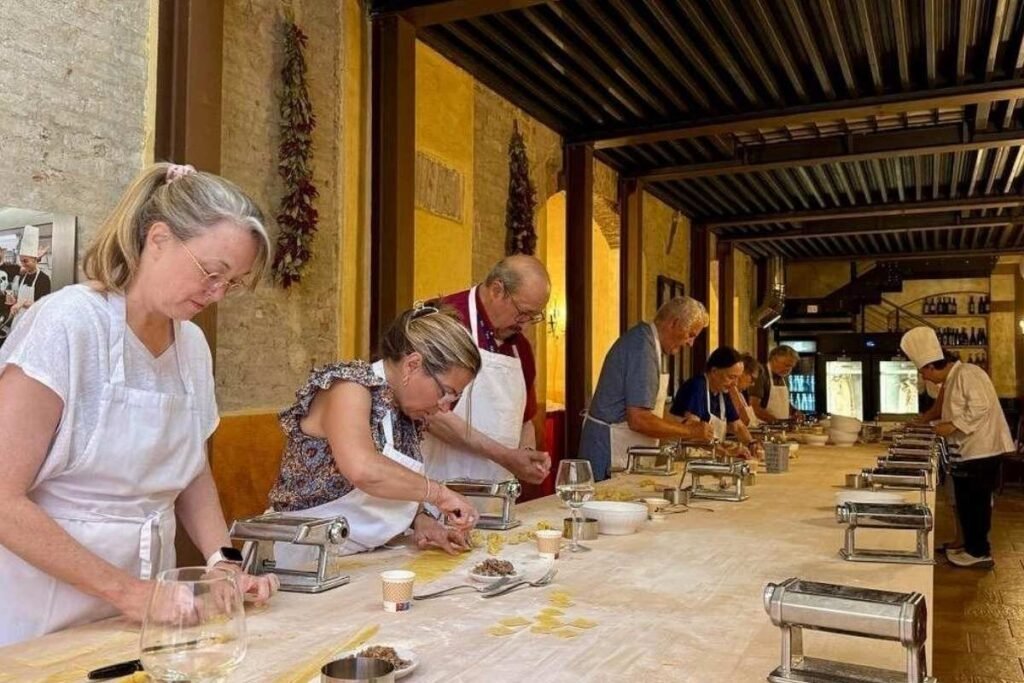
Some classes go further and teach you stuffed pasta shapes, such as ravioli or tortelloni, which require a bit more patience but are incredibly satisfying to make. The fillings vary by class and season, but ricotta with spinach or a simple pecorino blend are common starting points. A good Rome pasta making class with tiramisu will walk you through every step, from mixing the dough to plating the finished dish.
One practical tip: wear comfortable clothes you do not mind getting a little floury. The process is hands-on from the first minute, and that is exactly the point.
The Sauces, Sides & Roman Classics That Round Out the Menu
Pasta alone does not make a Roman meal. Most cooking classes in Rome pair your fresh pasta with one or more traditional sauces, and this is where you start to understand what Roman cooking is actually about. Cacio e pepe, amatriciana, and carbonara are staples you will encounter. Each one has very few ingredients, which means technique matters more than anything else.
Carbonara is a good example. The sauce comes together from eggs, Pecorino Romano, guanciale, and black pepper. There is no cream, and the timing has to be right to avoid scrambling the eggs. Learning this in a kitchen with a local chef is far more useful than watching a video at home.
Some classes also include a vegetable-based Roman sauce or a seasonal option, which is particularly common in vegetarian cooking classes in Rome that focus on plant-forward versions of classic recipes. If you are cooking in the Trastevere neighborhood, the ingredients often reflect what is available at the local market that morning, giving the meal a genuinely seasonal character. A cooking class in Trastevere, Rome is a great way to experience that local market-to-table approach firsthand.
Tiramisu and the Sweet Finish You Will Not Forget
Many Rome cooking classes end with dessert, and tiramisu is the most common choice. It is a dish that looks impressive but is approachable for beginners, which makes it a smart way to close out a hands-on session. You will whip mascarpone with egg yolks and sugar, fold in whipped cream or egg whites, and layer the mixture with espresso-soaked savoiardi biscuits.
The result is usually eaten at the table at the end of class, alongside a glass of wine or a digestivo. It is a relaxed, convivial ending that feels entirely Roman. By that point in the day, you have made pasta from scratch, learned two or three classic sauces, and built a tiramisu with your own hands. That is not a bad afternoon by any measure.
If you are planning your trip and want to know what to prioritize, a pasta-focused class gives you the most transferable skills. The techniques you pick up in Rome will follow you home and into your own kitchen long after the trip is over.